
Heat Shock Protein 27
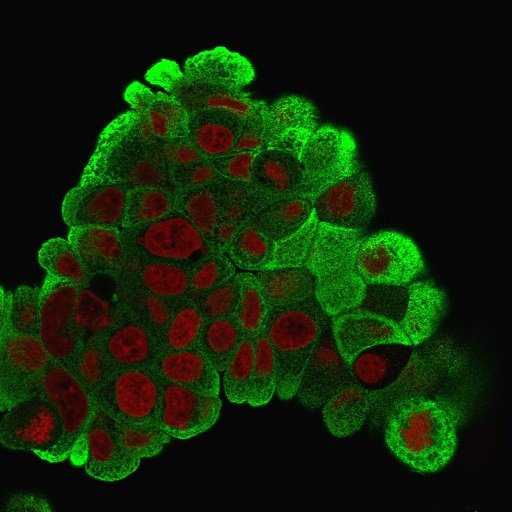
High-grade cervical intraepithelial neoplasia (CIN III) High-grade cervical intraepithelial neoplasia (CIN III) Cervical squamous cell carcinoma Heat shock proteins (HSPs) are a family of molecular chaperones that facilitate a host of critical cellular functions, including protein homeostasis, transport processes, and signal transduction. These proteins can be detected under normal physiological conditions but there is a general increase in expression upon exposure to cellular stresses. In cancerous disease states, HSPs function in promoting tumor cell survival.1 Among the members of the HSP family that have been subject to extensive study, HSP27 has been demonstrated to be present in a variety of cancer types, including malignancies of the breast,2 colon,3 kidney,4 and cervix.5 Anti-HSP27 has also been shown to be helpful in distinguishing between high grade cervical intraepithelial neo
 Breast/Gynecological
 Monoclonal
 Mouse
Datos técnicos
- Reactividad
- paraffin
- Visualización
- cytoplasmic
- Control
- cervical intraepithelial neoplasm, cervical squamous cell carcinoma
- Estabilidad
- up to 36 mos. at 2-8°C
